
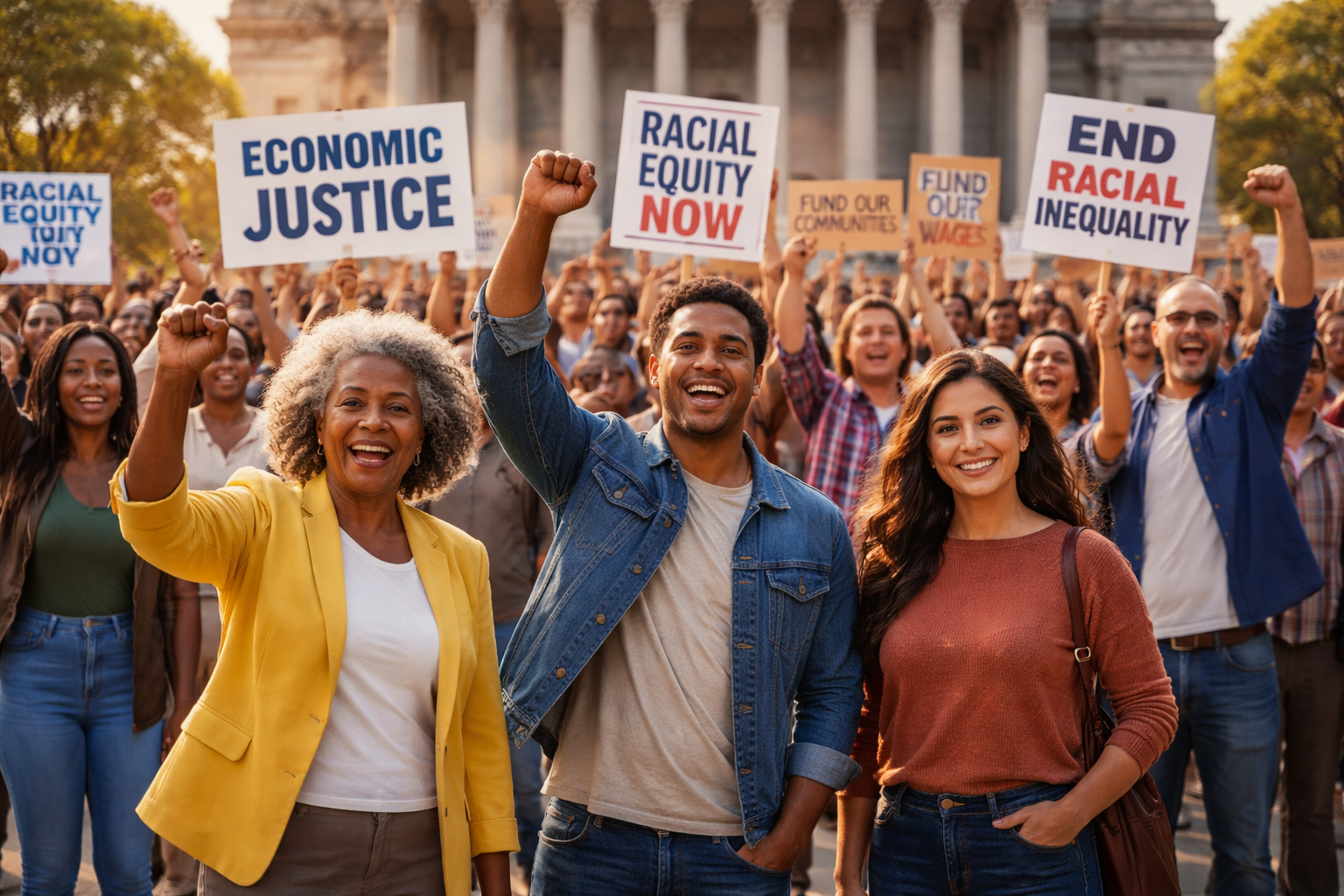
Economic justice and racial equity have become central pillars in the evolving civil rights landscape. While earlier movements focused primarily on legal and political rights, modern advocacy increasingly addresses economic disparities that continue to affect marginalized communities. Issues such as income inequality, employment discrimination, and access to wealth-building opportunities are now integral to the broader civil rights agenda.
Expanding the civil rights framework to include economic justice reflects a deeper understanding of systemic inequality. True equality cannot be achieved without addressing the economic structures that shape opportunities and outcomes. This article explores how economic justice and racial equity intersect and why they are essential for advancing social progress.
Equity Overview
Economic Justice Framework
| Element | Description |
|---|---|
| Income Equality | Reducing wage gaps across racial groups |
| Employment Access | Ensuring fair hiring and promotion practices |
| Wealth Building | Expanding access to assets and investments |
| Policy Reform | Creating laws that promote economic fairness |
| Community Investment | Supporting underserved communities |
Historical Context
The connection between economic justice and civil rights has deep historical roots. Early civil rights leaders recognized that legal equality alone was insufficient without economic empowerment. Efforts to secure fair wages, housing, and employment opportunities have long been part of the struggle for equality.
Despite progress, systemic barriers persist. Discriminatory practices in housing, education, and employment have created lasting economic disparities. Understanding this history is essential for addressing current challenges and shaping effective policies.
Income Inequality
Income inequality remains a significant issue in achieving racial equity. Wage gaps between different racial groups highlight ongoing disparities in economic opportunities. Factors such as unequal access to education and discrimination in the workplace contribute to these differences.
Addressing income inequality requires targeted strategies, including fair wage policies and equal pay initiatives. By ensuring that all individuals have access to equitable compensation, societies can move closer to achieving economic justice.
Employment Access
- Eliminating discriminatory hiring practices
- Promoting diversity and inclusion in workplaces
- Providing equal opportunities for career advancement
- Supporting workforce development programs
Employment access is a key driver of economic mobility. Ensuring fair hiring and promotion practices allows individuals from diverse backgrounds to participate fully in the economy. Inclusive workplaces benefit both employees and organizations.
Workforce development programs play an important role in bridging skill gaps. By providing training and education, these programs help individuals access better job opportunities and improve their economic prospects.
Wealth Building
Wealth building is essential for long-term economic stability. Access to assets such as property, savings, and investments allows individuals to create financial security and pass resources to future generations. However, disparities in wealth accumulation remain significant.
Expanding access to financial tools and opportunities is critical. Policies that support homeownership, entrepreneurship, and investment can help reduce wealth gaps and promote equity.
Policy Reforms
- Implementing fair housing and lending policies
- Strengthening labor protections and wage laws
- Expanding access to quality education
- Supporting small businesses in underserved communities
Policy reforms are crucial for addressing systemic inequality. Effective policies create a framework that promotes fairness and equal opportunity. Governments play a key role in implementing and enforcing these measures.
Collaboration between public and private sectors can enhance the impact of policy reforms. By working together, stakeholders can develop comprehensive solutions that address complex economic challenges.
Community Investment
Investing in communities is a powerful way to promote economic justice. Infrastructure development, education, and healthcare improvements can significantly enhance quality of life and economic opportunities. Targeted investments help address disparities in underserved areas.
Community-based initiatives also empower residents to take an active role in development. By involving local stakeholders, these initiatives ensure that solutions are tailored to specific needs and challenges.
Systemic Challenges
Despite progress, significant challenges remain. Structural inequalities embedded in economic systems can be difficult to dismantle. Addressing these issues requires sustained effort and collaboration across sectors.
Resistance to change and limited resources can also hinder progress. Overcoming these challenges requires strong leadership, advocacy, and public support. Continuous evaluation and adaptation are essential for success.
Key Takeaways
Economic justice and racial equity are essential components of a comprehensive civil rights agenda. By addressing income inequality, employment access, wealth building, and policy reform, societies can create more equitable opportunities for all individuals. Expanding the focus of civil rights to include economic factors reflects a deeper commitment to true equality.
Sustained efforts, collaboration, and innovative solutions are necessary to overcome systemic challenges. By prioritizing economic justice, communities can move toward a more inclusive and equitable future where opportunities are accessible to everyone.