
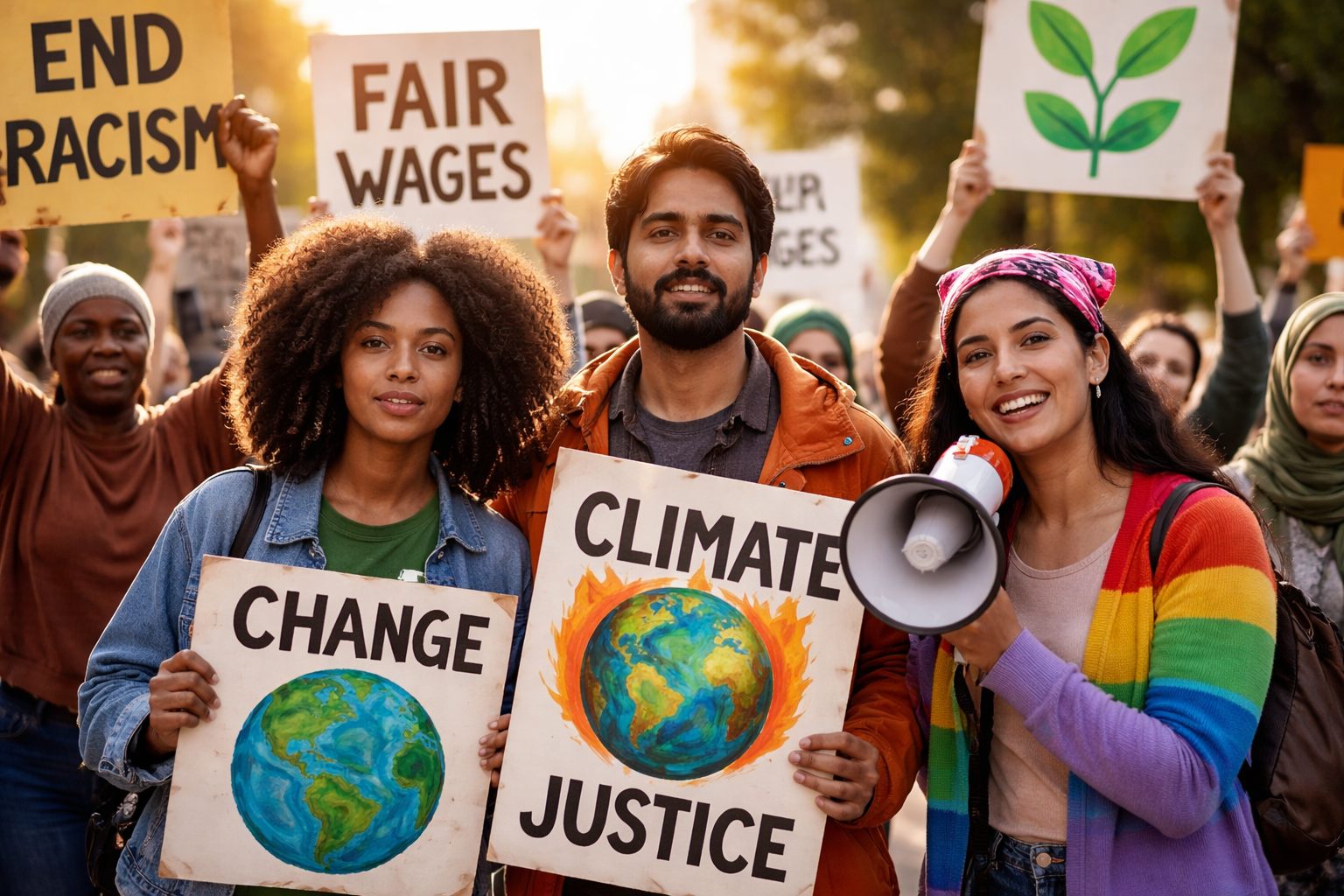
Intersectionality has become a central framework in understanding modern social justice movements. Originally introduced by Kimberlé Crenshaw, the concept highlights how overlapping systems of inequality—such as race, class, gender, and environment—shape lived experiences. In today’s world, intersectionality is especially important in addressing the interconnected challenges of racial injustice, climate change, and economic inequality.
By recognizing these overlapping issues, activists and policymakers can create more inclusive and effective solutions. Intersectionality encourages a holistic approach, ensuring that no group is overlooked in the pursuit of justice and sustainability.
Concept Overview
Understanding intersectionality requires examining how different dimensions of inequality intersect and influence one another in social justice movements.
Overview Of Intersectionality Elements
| Component | Description |
|---|---|
| Racial Equity | Addressing systemic discrimination based on race |
| Climate Justice | Linking environmental issues with social inequality |
| Economic Equity | Ensuring fair distribution of resources and opportunities |
| Policy Integration | Combining solutions across multiple sectors |
| Community Impact | Effects on marginalized populations |
| Advocacy Strategies | Inclusive approaches to activism |
These elements illustrate how intersectionality functions as both a theoretical framework and a practical tool for change. It helps identify root causes and interconnected challenges.
Racial Justice
Racial inequality remains a core issue within social justice movements. Communities of color often face systemic barriers in areas such as education, healthcare, and employment. Movements like Black Lives Matter have brought global attention to issues of racial injustice and police violence.
Intersectionality reveals that racial inequality is often compounded by other factors, such as economic status and environmental conditions. Addressing racial justice, therefore, requires a comprehensive approach that considers these overlapping influences.
Climate Equity
Climate change disproportionately affects marginalized communities, particularly those with limited resources. Issues such as pollution, extreme weather, and lack of infrastructure often impact low-income and minority populations more severely.
The concept of climate justice emphasizes that environmental policies must consider social equity. Organizations like Greenpeace advocate for solutions that address both environmental sustainability and social fairness.
Economic Justice
- Income Inequality: Disparities in wealth distribution
- Access to Resources: Unequal availability of education and healthcare
- Labor Rights: Fair wages and safe working conditions
- Housing Security: Affordable and stable living conditions
Economic inequality is deeply intertwined with both racial and environmental issues. Intersectional approaches aim to address these disparities by promoting inclusive economic policies.
Policy Integration
Effective social justice strategies require integrating policies across different sectors. This includes combining environmental regulations with economic reforms and anti-discrimination measures.
Intersectional policymaking ensures that solutions are comprehensive and mutually reinforcing. It also helps prevent unintended consequences that may arise from addressing issues in isolation.
Grassroots Movements
- Community Organizing: Local initiatives addressing specific needs
- Coalition Building: Partnerships across different advocacy groups
- Youth Activism: Engagement of younger generations
- Digital Campaigns: Use of online platforms for awareness
Grassroots movements play a crucial role in advancing intersectional justice. They bring diverse perspectives and ensure that solutions are grounded in real-world experiences.
Systemic Barriers
Despite progress, significant barriers remain in achieving intersectional justice. Structural inequalities, political resistance, and limited resources can hinder efforts to create meaningful change.
Intersectionality helps identify these barriers by highlighting how different forms of discrimination intersect. This understanding is essential for developing strategies that address root causes rather than symptoms.
Global Perspective
Intersectionality is not limited to a single country or region. Around the world, communities face interconnected challenges that require coordinated responses. Global movements often share strategies and collaborate to address common issues.
This international perspective strengthens the impact of social justice efforts. It also highlights the universal relevance of intersectional approaches.
Future Directions
- Inclusive Policies: Designing laws that address multiple inequalities
- Data-Driven Insights: Using research to inform decision-making
- Technological Innovation: Leveraging tools for advocacy and analysis
- Sustainable Development: Balancing growth with equity
Future advancements in intersectional justice will depend on collaboration and innovation. By embracing new approaches, movements can continue to evolve and expand their impact.
Social Impact
Intersectionality has reshaped how social justice is understood and practiced. It encourages a more nuanced and inclusive approach that recognizes the complexity of human experiences.
This shift has led to more effective advocacy, stronger communities, and greater awareness of interconnected issues. It also fosters empathy and solidarity across different groups.
Final Thoughts
Intersectionality provides a powerful framework for addressing the interconnected challenges of race, climate, and economic equity. By bridging these areas, it enables more comprehensive and inclusive solutions that reflect the realities of diverse communities.
As social justice movements continue to evolve, the principles of intersectionality will remain essential in guiding efforts toward a fairer and more sustainable world.