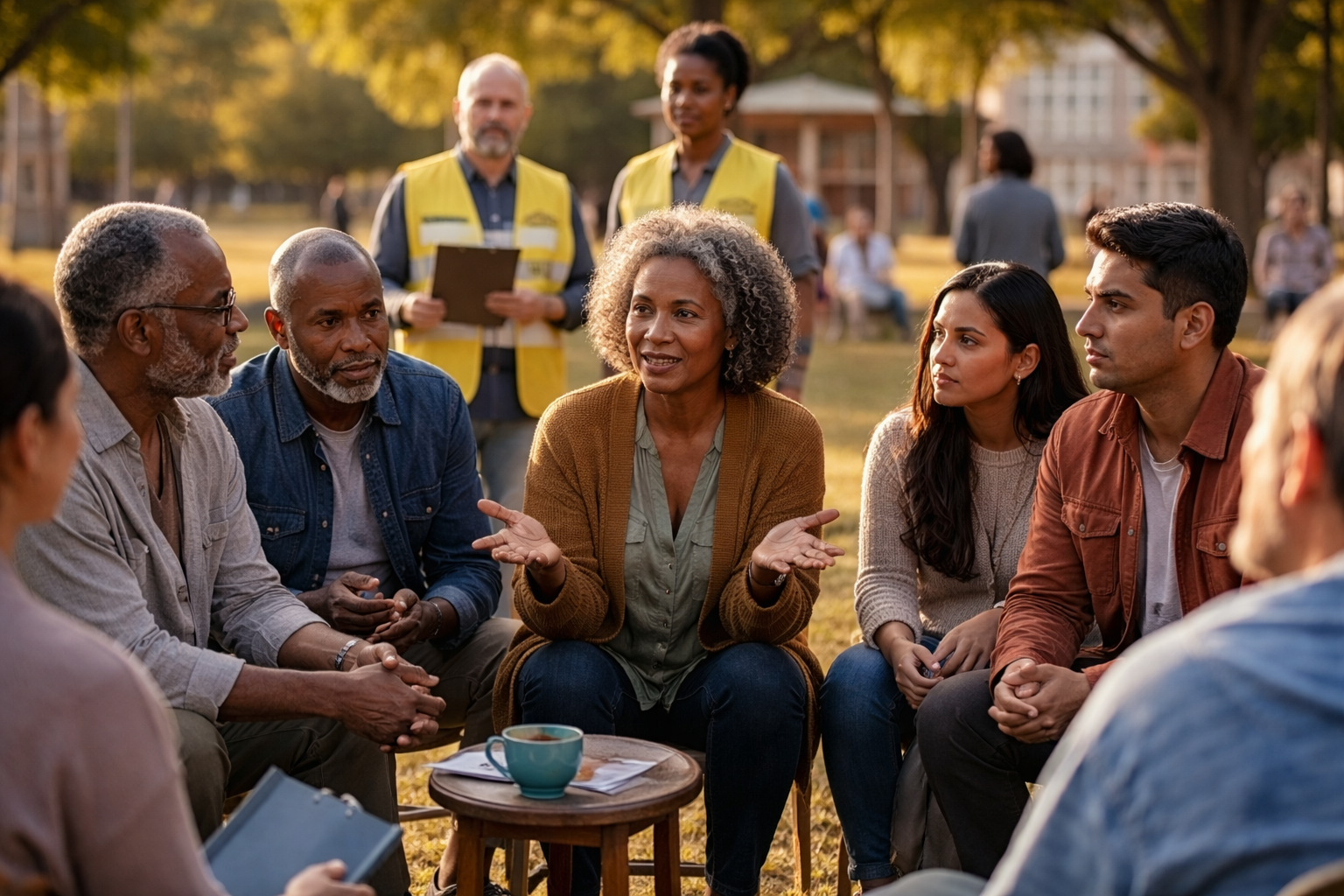
Communities around the world are rethinking how conflict is managed and resolved, especially in contexts where traditional policing may not fully address underlying social issues. Community-led conflict resolution offers an alternative approach that focuses on dialogue, accountability, and healing rather than punishment. These models prioritize local participation and aim to build safer, more cohesive environments.
As concerns about over-policing, systemic inequality, and trust deficits grow, many communities are exploring grassroots solutions. By empowering residents to take an active role in resolving disputes, these approaches promote long-term stability and social well-being. This article examines the principles, practices, and impact of community-led conflict resolution.
Concept Overview
Community Conflict Resolution Summary
| Aspect | Details |
|---|---|
| Approach | Community-driven conflict management |
| Core Methods | Mediation, restorative justice, dialogue |
| Primary Goal | Reduce reliance on traditional policing |
| Key Benefit | Builds trust and accountability |
| Outcome | Safer and more cohesive communities |
Community-led conflict resolution shifts the focus from enforcement to engagement. Instead of relying solely on law enforcement, communities develop their own systems to address disputes and maintain order.
This approach emphasizes prevention and early intervention. By addressing issues before they escalate, communities can reduce the need for punitive measures and create more sustainable solutions.
Core Principles
- Restorative Justice
Focuses on repairing harm and restoring relationships rather than assigning blame. - Community Accountability
Encourages individuals to take responsibility for their actions within a supportive environment. - Inclusivity
Ensures that all voices, especially marginalized groups, are heard and respected. - Prevention Focus
Addresses root causes of conflict to prevent future disputes.
These principles form the foundation of community-led approaches. They promote fairness, empathy, and collaboration, which are essential for effective conflict resolution.
By prioritizing relationships over punishment, these models create opportunities for healing and growth. This leads to stronger and more resilient communities.
Resolution Models
- Mediation Circles
Facilitated discussions where participants work together to resolve conflicts. - Peer Intervention Programs
Community members are trained to intervene in disputes and de-escalate situations. - Restorative Justice Panels
Groups that bring together affected parties to discuss harm and agree on solutions. - Community Courts
Local systems that handle minor offenses through collaborative decision-making.
Different models offer flexibility in addressing various types of conflicts. Communities can adapt these approaches to fit their specific needs and cultural contexts.
The effectiveness of these models depends on training, trust, and community engagement. When implemented properly, they can significantly reduce reliance on traditional policing.
Implementation Steps
- Community Training
Educating residents on conflict resolution techniques and communication skills. - Establishing Guidelines
Creating clear processes for handling disputes. - Building Partnerships
Collaborating with organizations and local leaders. - Monitoring Outcomes
Evaluating the effectiveness of programs and making improvements.
Successful implementation requires careful planning and ongoing support. Communities must invest time and resources to develop sustainable systems.
Continuous evaluation ensures that these approaches remain effective and responsive to changing needs.
Benefits Achieved
- Reduced Conflict Escalation
Early intervention prevents disputes from becoming more serious. - Improved Trust
Community involvement strengthens relationships and confidence in local systems. - Cost Efficiency
Reduces the financial burden associated with traditional policing. - Empowered Residents
Encourages active participation and shared responsibility.
The benefits of community-led conflict resolution extend beyond individual disputes. They contribute to a broader culture of cooperation and mutual respect.
These outcomes highlight the potential of alternative approaches to create safer and more inclusive communities.
Challenges Faced
Despite its advantages, community-led conflict resolution faces several challenges. Limited resources and funding can hinder the development of programs. Additionally, gaining community trust and participation may take time.
There may also be resistance from individuals who are accustomed to traditional policing methods. Ensuring fairness and consistency in community-led systems is another critical concern.
Addressing these challenges requires strong leadership, clear communication, and ongoing commitment from all stakeholders.
Technology Role
Technology can support community-led conflict resolution by providing tools for communication, training, and data management. Online platforms enable virtual mediation sessions and resource sharing.
Digital tools also help track outcomes and measure effectiveness. This data-driven approach can improve program design and demonstrate impact to stakeholders.
By integrating technology, communities can enhance accessibility and efficiency in their conflict resolution efforts.
Global Examples
- Neighborhood Mediation Programs
Local initiatives that resolve disputes through dialogue and facilitation. - Restorative Justice Initiatives
Programs focused on repairing harm and rebuilding relationships. - Community Safety Groups
Volunteer-based teams that address conflicts and promote safety. - Youth Engagement Projects
Initiatives that involve young people in conflict resolution activities.
Global examples demonstrate the versatility of community-led approaches. Different regions have adapted these models to address unique challenges and cultural contexts.
These initiatives provide valuable lessons for communities seeking to implement similar programs.
Future Outlook
The future of community-led conflict resolution looks promising as more communities recognize the limitations of traditional policing. Increased investment in training, technology, and partnerships will support the growth of these initiatives.
Emerging trends include the integration of mental health services and social support systems. This holistic approach addresses the root causes of conflict and promotes long-term well-being.
As these models continue to evolve, they have the potential to transform how societies approach safety and justice.
The Way Forward
Community-led conflict resolution offers a powerful alternative to traditional policing by focusing on dialogue, accountability, and healing. By empowering residents and fostering collaboration, these approaches create more resilient and cohesive communities.
While challenges remain, the benefits of reduced conflict, improved trust, and enhanced community engagement make this model a compelling solution. With continued innovation and commitment, community-led approaches can play a vital role in shaping the future of justice and public safety.