
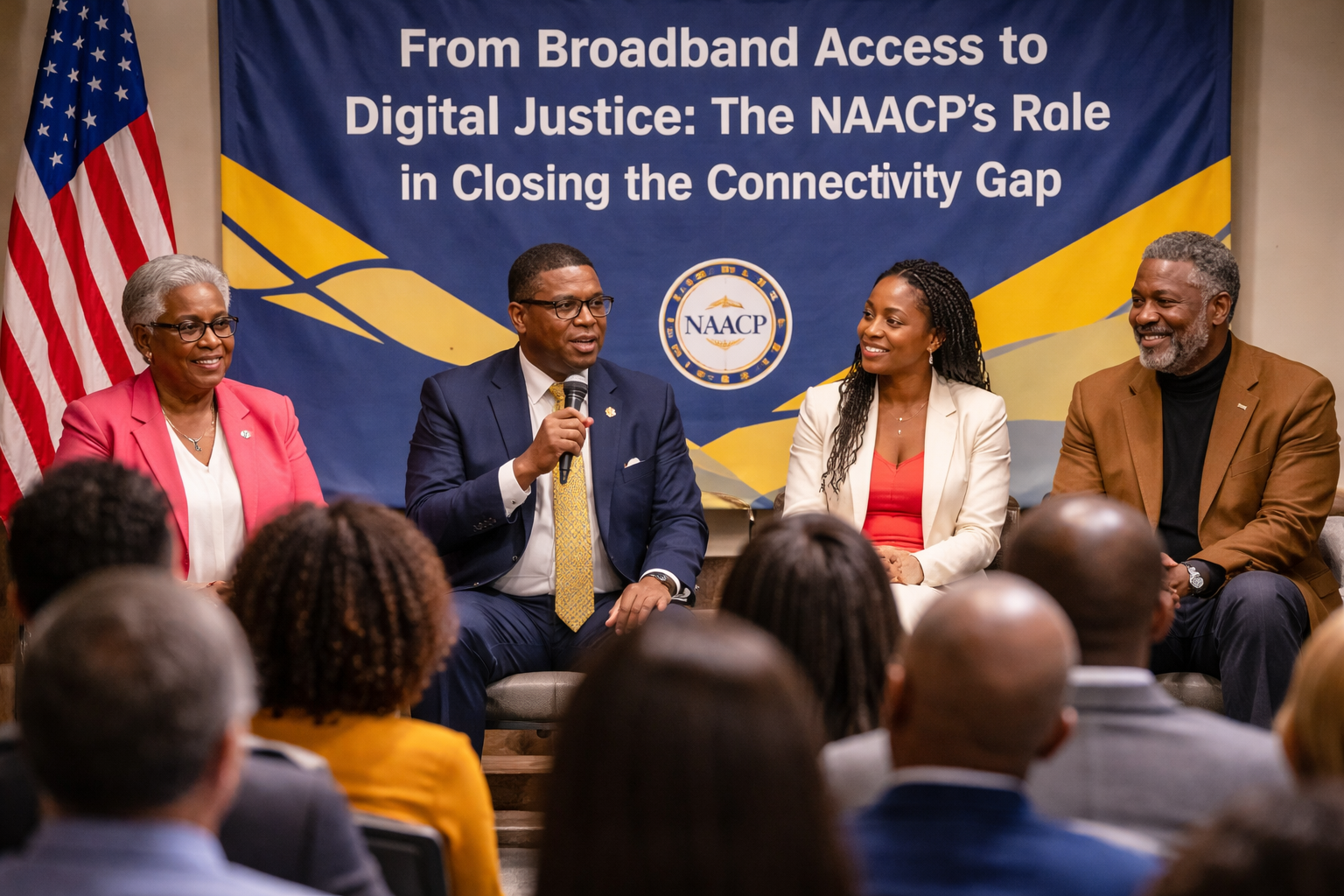
Access to reliable internet has become essential for education, employment, healthcare, and civic participation. Yet, millions of people still face barriers to connectivity, creating a digital divide that reinforces existing inequalities. This gap is not just about technology—it is a matter of fairness, opportunity, and rights.
The NAACP has taken a leading role in addressing these disparities. By advocating for equitable broadband access and promoting digital justice, the organization is working to ensure that all communities can fully participate in the digital age.
Access Overview
Key Insights on Broadband Access and Digital Justice
| Aspect | Details |
|---|---|
| Digital Divide | Unequal access to internet services |
| Primary Barriers | Cost, infrastructure, digital literacy |
| NAACP Role | Advocacy, policy reform, community programs |
| Goal | Universal and equitable connectivity |
| Impact | Improved access to opportunities |
Broadband access is now considered a basic necessity rather than a luxury. Without it, individuals face significant disadvantages in education, job opportunities, and access to services.
Digital justice goes beyond access. It focuses on ensuring that technology is used in ways that are fair, inclusive, and empowering for all communities.
Connectivity Gaps
- Many communities, particularly in rural and low-income areas, lack reliable broadband infrastructure. This limits access to essential online services.
- High costs and limited service options further widen the gap, making connectivity unaffordable for many households.
The digital divide disproportionately affects marginalized groups. This creates barriers to social and economic mobility.
Addressing these gaps requires both infrastructure development and policy changes. Without comprehensive solutions, disparities will persist.
NAACP Advocacy
- The NAACP advocates for policies that expand broadband access and reduce costs.
- It works with government agencies, private companies, and community organizations to promote equitable solutions.
Advocacy efforts include raising awareness about the importance of digital access. The NAACP highlights how connectivity impacts education, employment, and civic engagement.
By influencing policy, the organization helps shape initiatives that address the root causes of the digital divide.
Policy Initiatives
- Effective policy is essential for closing the connectivity gap. Government programs can support infrastructure development and provide subsidies for low-income households.
- The NAACP pushes for regulations that ensure fair pricing and equal access to services.
Policy initiatives also focus on accountability. Service providers must meet standards for coverage and quality.
These efforts create a framework for long-term solutions. They ensure that progress is sustainable and inclusive.
Community Programs
Community-based programs play a crucial role in expanding digital access. These initiatives provide resources such as free Wi-Fi, training, and devices.
The NAACP supports programs that address both access and digital literacy. This ensures that individuals can effectively use technology.
Local partnerships strengthen these efforts. Community organizations understand the specific needs of their populations.
By focusing on grassroots solutions, these programs create meaningful and lasting impact.
Digital Literacy
- Access alone is not enough; individuals must also have the skills to use technology effectively.
- Digital literacy programs teach essential skills such as navigating the internet, using online tools, and protecting personal information.
The NAACP emphasizes the importance of education in bridging the digital divide. Training programs empower individuals to take full advantage of connectivity.
Improved digital literacy enhances opportunities. It enables people to access education, jobs, and services more effectively.
Economic Impact
- Expanding broadband access has significant economic benefits. It creates opportunities for employment, entrepreneurship, and innovation.
- Connected communities are better positioned to participate in the digital economy.
The NAACP’s efforts contribute to economic growth by enabling more people to access opportunities.
Reducing the digital divide also supports workforce development. It ensures that individuals have the skills needed in a modern economy.
Equity Goals
- Digital justice focuses on fairness and inclusion. It aims to ensure that all individuals have equal access to technology and its benefits.
- The NAACP works to address systemic inequalities that contribute to the digital divide.
Equity goals include affordable access, inclusive policies, and community empowerment. These objectives guide the organization’s efforts.
Achieving digital justice requires collaboration. Governments, businesses, and communities must work together to create equitable solutions.
Final Thoughts
The digital divide is one of the most pressing challenges of the modern era, affecting access to opportunities and quality of life. The NAACP plays a vital role in addressing this issue through advocacy, policy reform, and community engagement.
By focusing on both access and equity, the NAACP is helping to build a more inclusive digital future. Closing the connectivity gap is not just about technology—it is about ensuring fairness, opportunity, and justice for all.